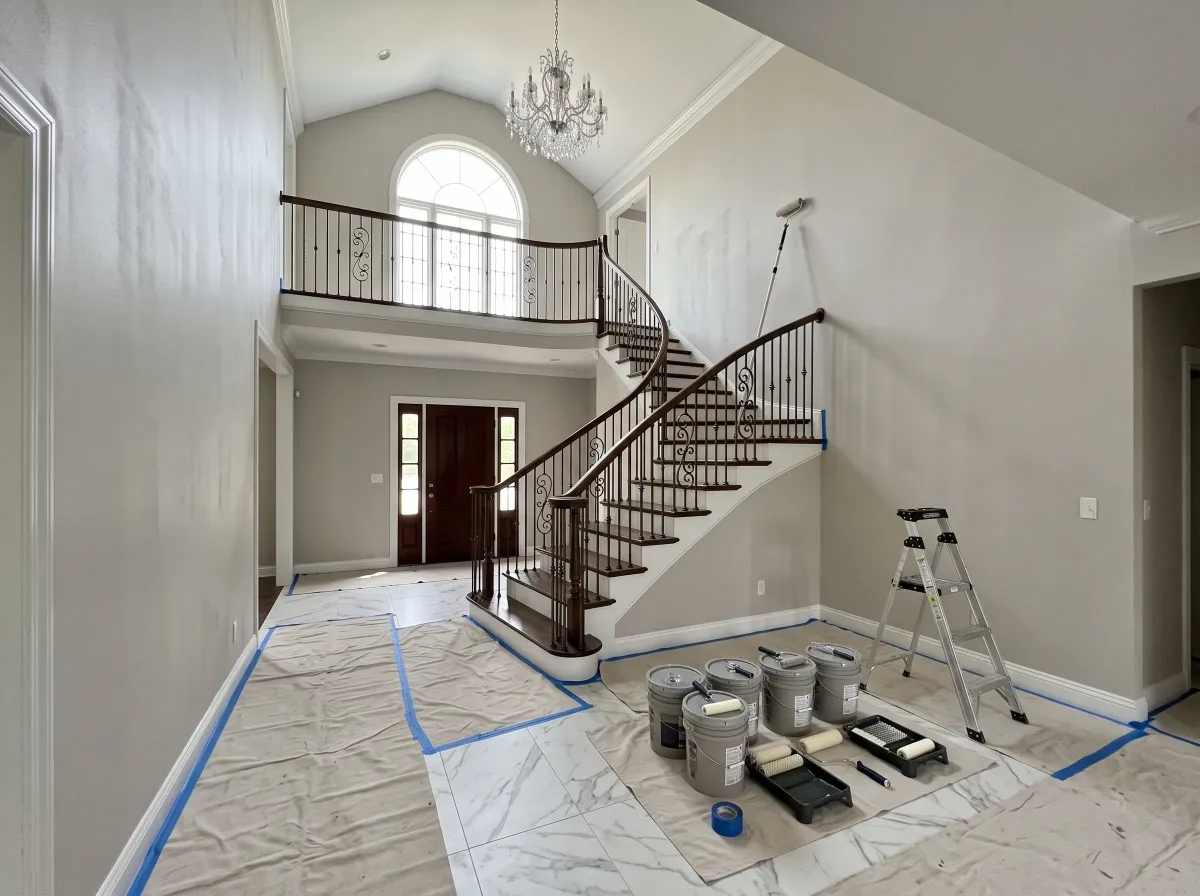
What to Expect During an Interior Painting Project in Ladue, MO
An interior painting project involves more than choosing a color and applying paint to the walls. The best results come from planning, careful room protection, drywall repair, surface preparation, priming where needed, clean paint application, and a final review.
That process matters in Ladue homes, where larger rooms, detailed trim, custom doors, formal spaces, smooth walls, and natural light can make small flaws easier to notice. A rushed paint job may change the color, but it can also leave behind rough patches, uneven coverage, visible drywall damage, or sloppy trim lines.
EJC Painting & Drywall provides interior painting in Ladue, MO, for homeowners who want the project handled with care from start to finish. For a broader look at how painting and wall preparation work together, read our guide to painting and drywall services.
Why Interior Painting Requires Careful Planning in Ladue Homes
Interior painting in Ladue homes often requires a detail-focused approach. Many homes in the area have refined interiors, spacious rooms, custom features, tall walls, built-ins, formal dining rooms, home offices, and finished lower levels.
These features can make preparation even more important. A small drywall crack near a window, a scuffed baseboard, a rough patch in a hallway, or an uneven paint line around trim can stand out once the room is freshly painted.
Planning helps avoid these issues. Before the first coat goes on, the painter should understand the condition of the walls, the scope of the project, the surfaces being painted, and the finish expectations for each room.
A well-planned project feels organized, protects the home, and produces a cleaner final result.
Step 1: The Initial Walkthrough and Project Review
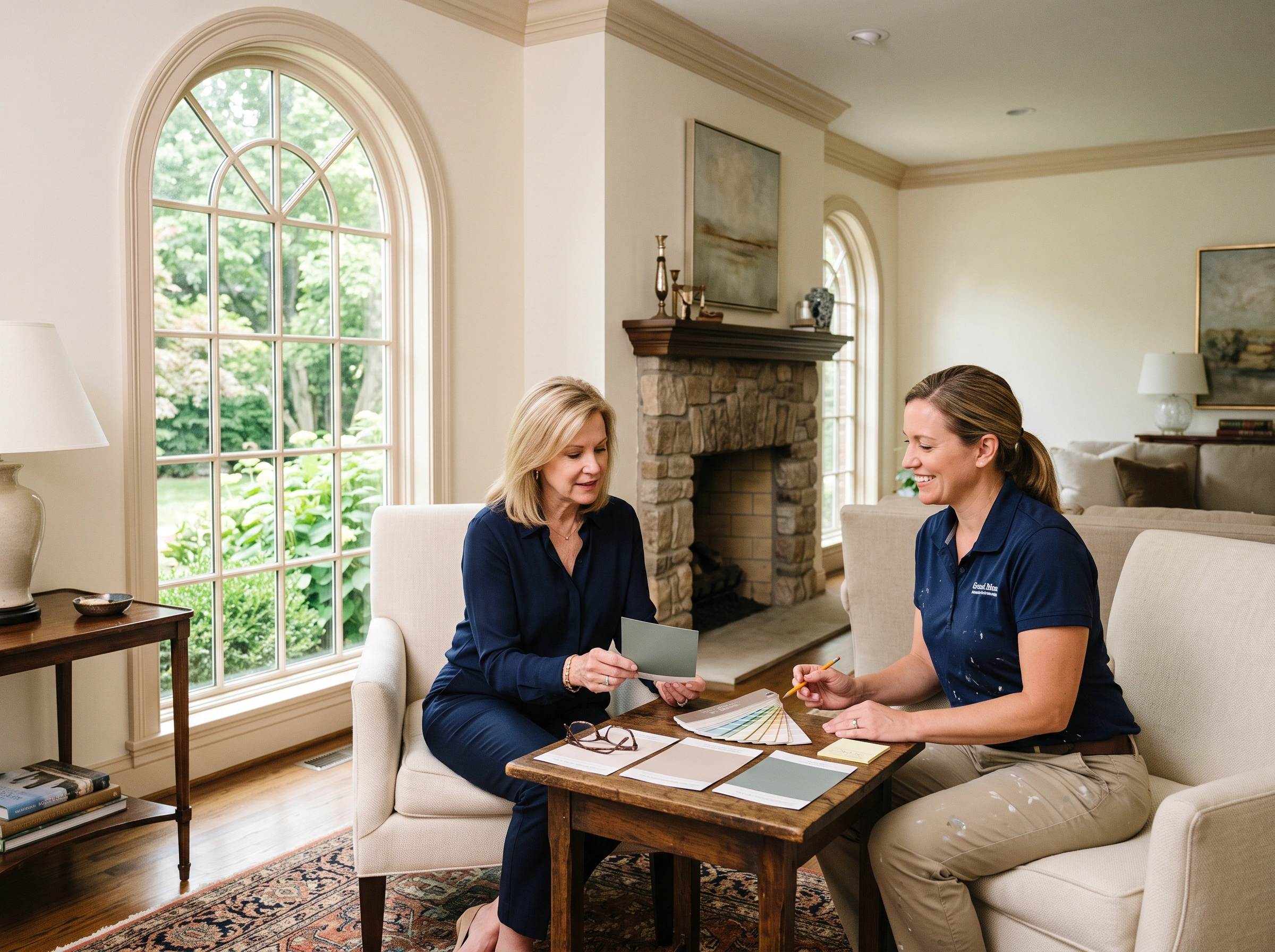
A professional interior painting project should begin with a walkthrough. This gives the homeowner and painter a chance to review each room, identify problem areas, and confirm what is included in the project.
During the walkthrough, the painter should look at the walls, ceilings, trim, doors, corners, and any visible drywall damage. This is also the time to discuss whether the project includes only walls or also ceilings, baseboards, crown details, paneled doors, built-ins, or stair trim.
For Ladue homes, this step is especially helpful in formal dining rooms, entryways, main bedrooms, home offices, stairways, lower levels, and other high-visibility spaces.
Homeowners should also discuss color goals, paint finishes, furniture movement, access needs, project timing, and any drywall concerns they have noticed.
Step 2: Color, Finish, and Room Use Decisions
Paint color is important, but finish matters too. The right paint finish depends on how the room is used, how much traffic it receives, and how much natural light enters the space.
Flat or matte finishes can work well in lower-traffic formal spaces, but they may show marks more easily. Eggshell is often a practical choice for bedrooms, living rooms, and sitting areas. Satin can work well in hallways, offices, children’s rooms, and busier rooms. Semi-gloss is commonly used for trim, doors, and moisture-prone areas.
In Ladue homes with large windows or bright rooms, paint can look different throughout the day. Natural light can also reveal surface flaws, especially with higher-sheen finishes.
That is why color and finish decisions should be made alongside surface preparation. The smoother the wall, the better the final paint finish will look.
Step 3: Protecting Floors, Furniture, Fixtures, and Details
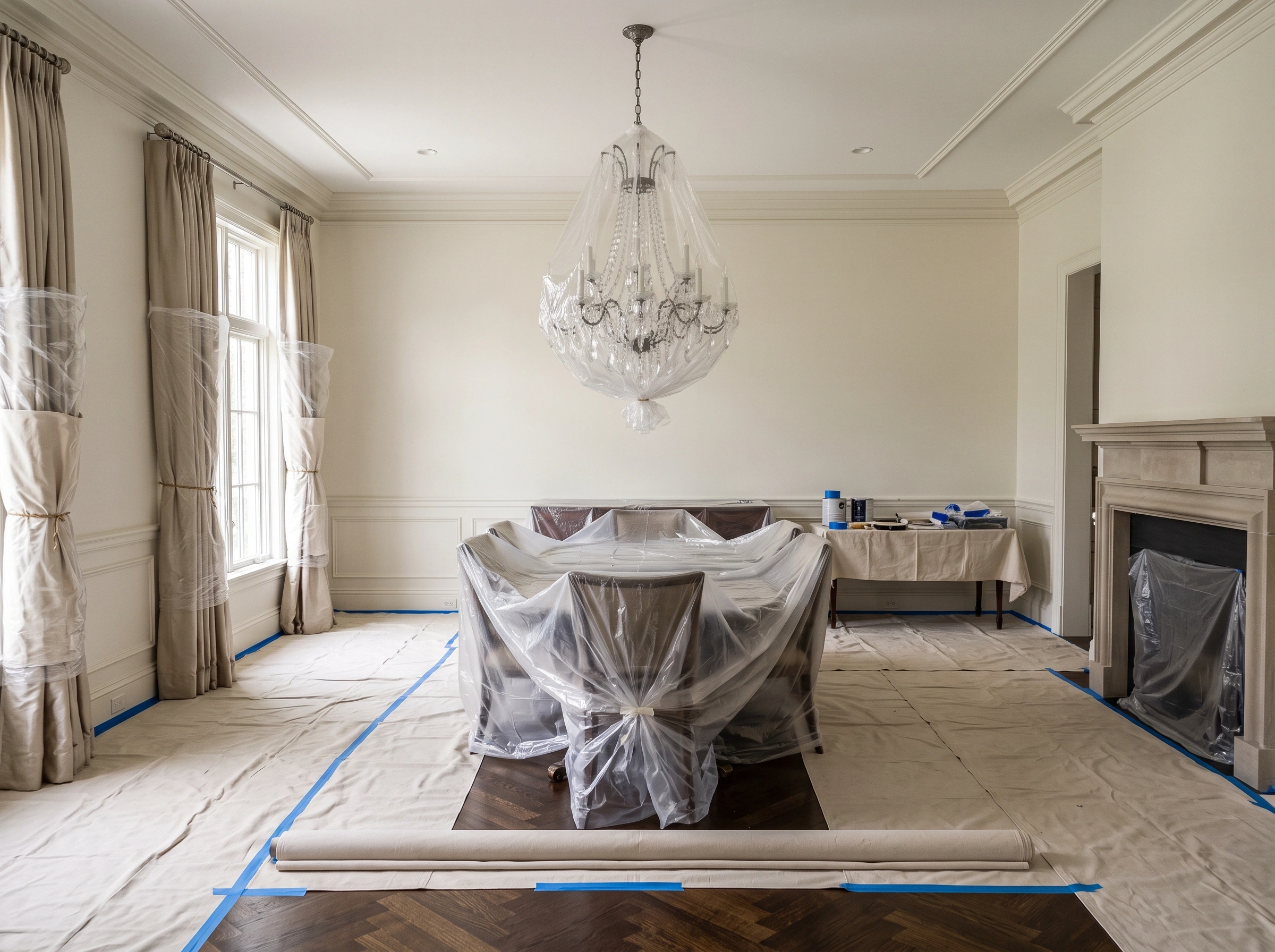
Before painting begins, the home should be protected. A professional painting project should feel organized, not careless or disruptive.
Floors, furniture, light fixtures, cabinetry, built-ins, stair rails, door hardware, window treatments, and other nearby details may need protection depending on the room. In Ladue homes, this can include finished flooring, area rugs, stone surfaces, custom cabinetry, decorative lighting, and detailed trim.
Protection may involve moving small furniture, covering larger pieces, using drop cloths, taping edges, removing switch plates, and keeping tools and paint materials organized.
This step matters because clean painting depends on more than brush and roller work. It also depends on respecting the home while the work is being completed.
Step 4: Drywall Repair and Surface Preparation Before Painting
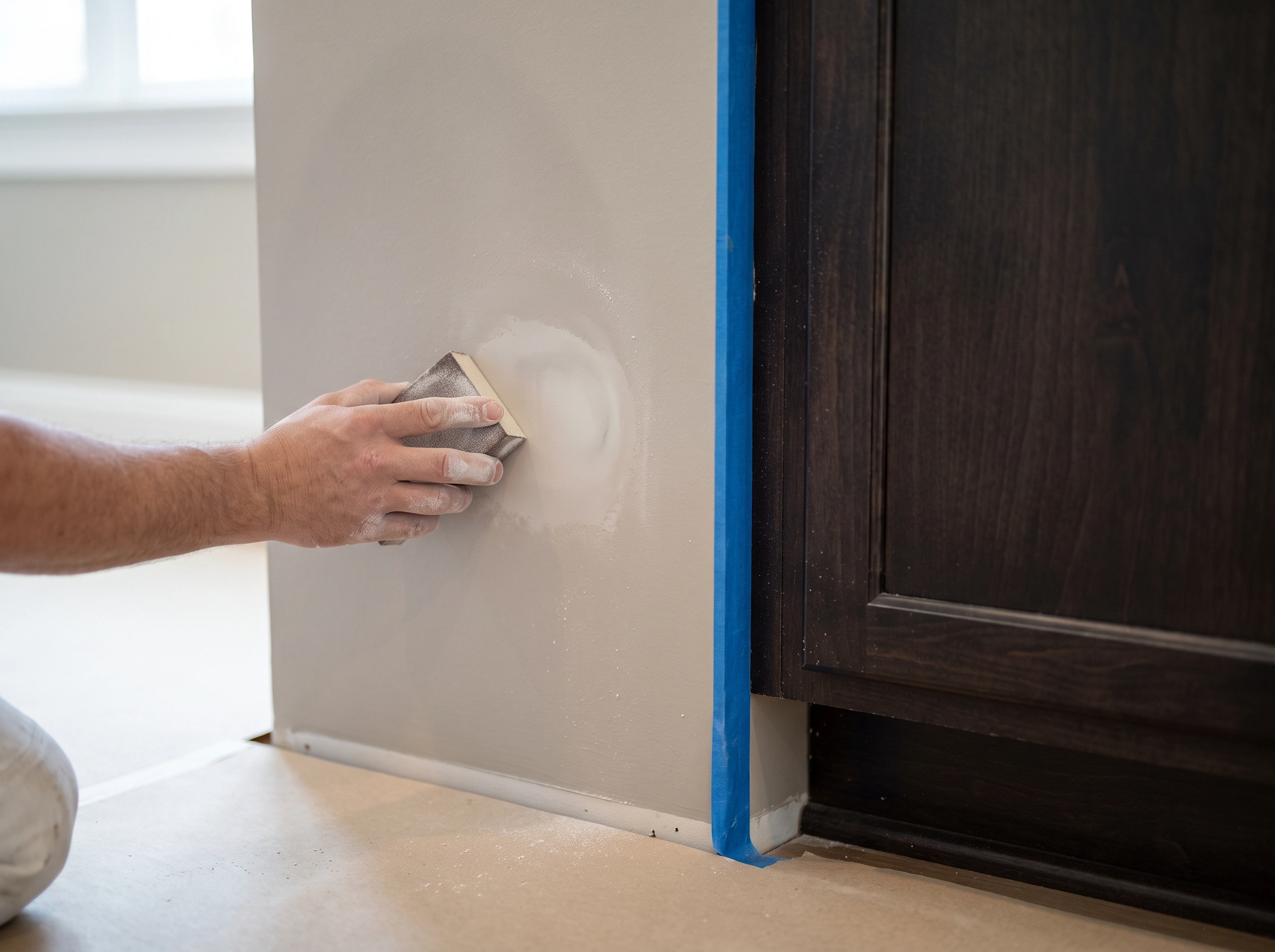
Drywall repair is one of the most important parts of an interior painting project. Paint can refresh a room, but it cannot hide damaged drywall, raised patchwork, nail holes, dents, cracks, or uneven seams.
Before painting, the walls should be checked for cracks, nail pops, small holes, rough old repairs, damaged corners, water stains, sanding marks, and other flaws. These areas may need patching, joint compound, sanding, spot priming, or blending before paint is applied.
In Ladue homes, this step is especially important in rooms with large windows, smooth walls, formal layouts, and high-visibility surfaces. Natural light can make drywall imperfections easier to see after painting.
Homeowners can also learn more about our painting and drywall services in Ladue, MO for drywall repair, interior painting, trim painting, and finishing.
Step 5: Preparing Trim, Doors, and Detailed Interior Features
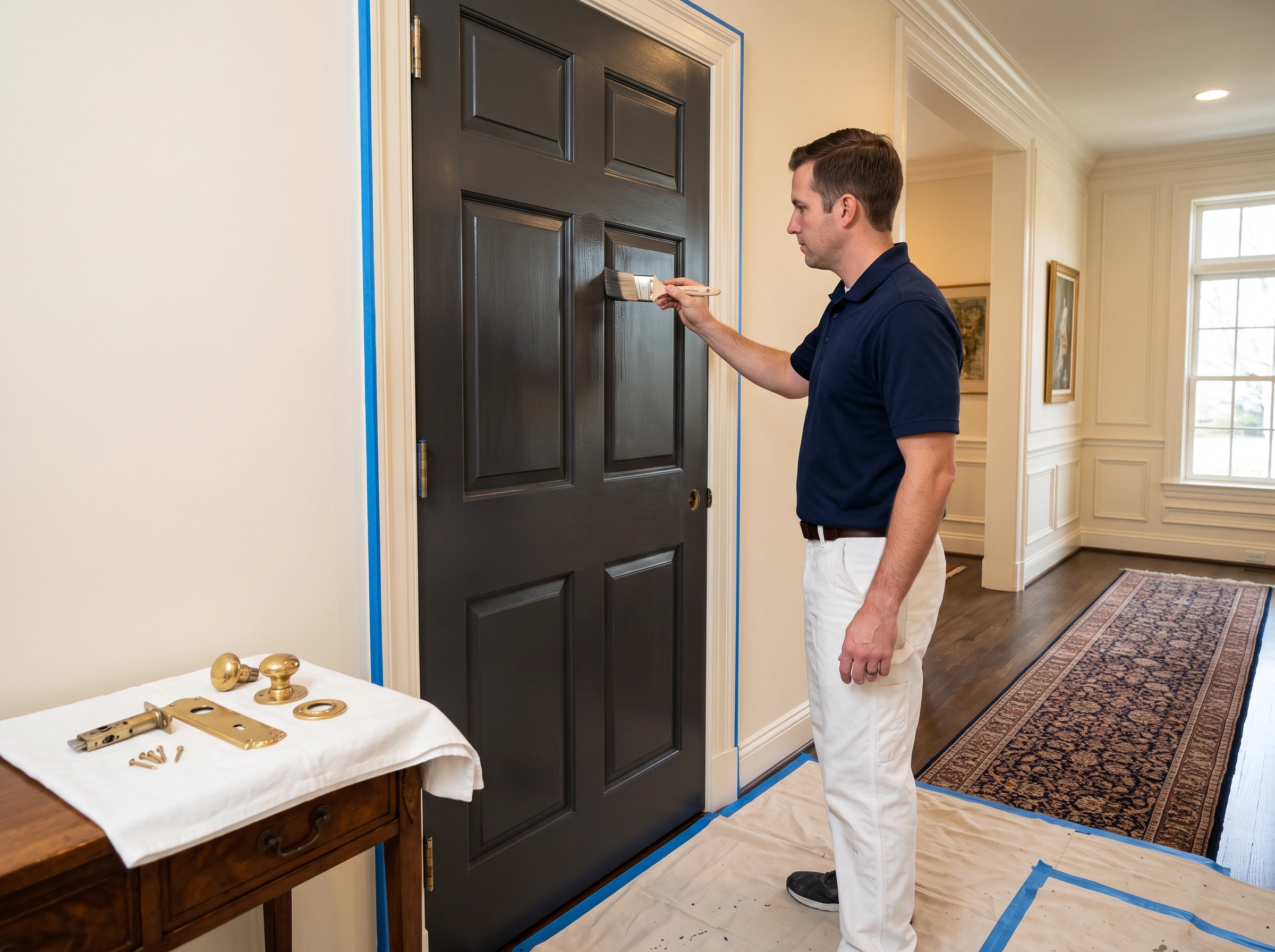
Trim and doors often have a major impact on the finished look of a room. Baseboards, crown details, door frames, paneled doors, stair trim, window casings, and built-ins help define the space.
If these details are chipped, scuffed, yellowed, or rough, the room may still feel unfinished even after the walls are painted. That is why trim and door preparation should be part of the project plan.
Trim may need cleaning, light sanding, caulking, filling, or priming before paint is applied. Doors may need sanding, hardware removal, or a more durable finish because they are touched and used often.
For Ladue interiors, clean trim lines and smooth door finishes can make a noticeable difference. These details help the room feel polished instead of simply repainted.
Step 6: Priming Where Needed
Not every repaint requires full primer, but primer is important in certain situations. Repaired drywall, new drywall, stains, patched areas, raw surfaces, dark color changes, and glossy old finishes may need primer before paint.
Primer helps create a more even base. It can also reduce flashing, which happens when repaired areas absorb paint differently and appear dull, shiny, or inconsistent after the paint dries.
This is especially important when drywall repairs are completed before painting. If a repaired section is not primed correctly, it may show through the final coat even if the paint color is applied evenly.
Primer helps the paint finish look smoother and more consistent across the room.
Step 7: Applying the Paint
Once the room is protected and the surfaces are prepared, painting can begin. The order may vary depending on the project, but walls, ceilings, trim, and doors are usually handled in planned stages.
The process may include cutting in around edges, rolling larger wall areas, applying even coats, allowing proper drying time, and adding a second coat when needed. Trim and doors may require different tools and techniques than walls.
Clean lines and even coverage are especially important in Ladue spaces such as formal rooms, stairways, entryways, living rooms, and home offices.
A professional painter should also keep the work area clean throughout the process. Paint materials, tools, and coverings should be managed carefully so the project feels controlled from start to finish.
Step 8: Cleanup and Room Reset
After painting is complete, cleanup should be part of the project. Drop cloths, tape, tools, paint materials, dust, and debris should be removed from the work area.
The painter should check for drips, inspect trim edges, remove tape carefully, reinstall outlet covers if they were removed, and review the condition of nearby floors and surfaces.
Depending on the project scope, furniture and room items may be reset after the paint has dried enough to safely do so. Labeled touch-up paint may also be left behind for future use.
A clean finish should not stop at the wall. The room should feel ready to use again when the project is complete.
Step 9: Final Walkthrough and Touch-Ups
A professional interior painting project should end with a final walkthrough. This allows the homeowner and painter to review the completed work together.
During the walkthrough, it is helpful to check wall coverage, trim lines, corners, door finishes, repaired drywall areas, paint sheen consistency, cleanup, and any small touch-ups that may be needed.
In Ladue homes, reviewing the project under natural light is especially useful. Large windows and bright rooms can reveal small inconsistencies that may not be obvious under artificial light.
The final walkthrough helps confirm that the room looks clean, complete, and ready for everyday use.
How Long Does an Interior Painting Project Take?
The timeline for an interior painting project depends on the size and scope of the work. A single simple room may be more straightforward, while a larger Ladue interior painting project with drywall repair, trim painting, tall walls, detailed doors, or multiple rooms may require more time and planning.
Other factors include ceiling height, furniture movement, color changes, drying time, surface condition, and whether ceilings, trim, doors, or built-ins are included.
The best timeline is usually determined after the walkthrough. That way, the painter can account for prep work, repairs, protection, paint application, drying time, cleanup, and final review.
How Ladue Homeowners Can Prepare Before Painters Arrive
Homeowners can help the project start smoothly by preparing a few things in advance. Fragile items should be moved out of the work area. Wall decor, small furniture, personal items, and delicate objects should be cleared where possible.
It also helps to choose colors ahead of time, confirm which rooms are included, note any drywall concerns, and discuss whether ceilings, trim, doors, closets, or built-ins are part of the project.
If pets will be home during the project, access and safety should also be discussed. Homeowners may also want to identify priority rooms if the project includes multiple spaces.
These steps help the painting team work efficiently while protecting the home and keeping the project organized.
Interior Painting Services Near Ladue and Surrounding Areas
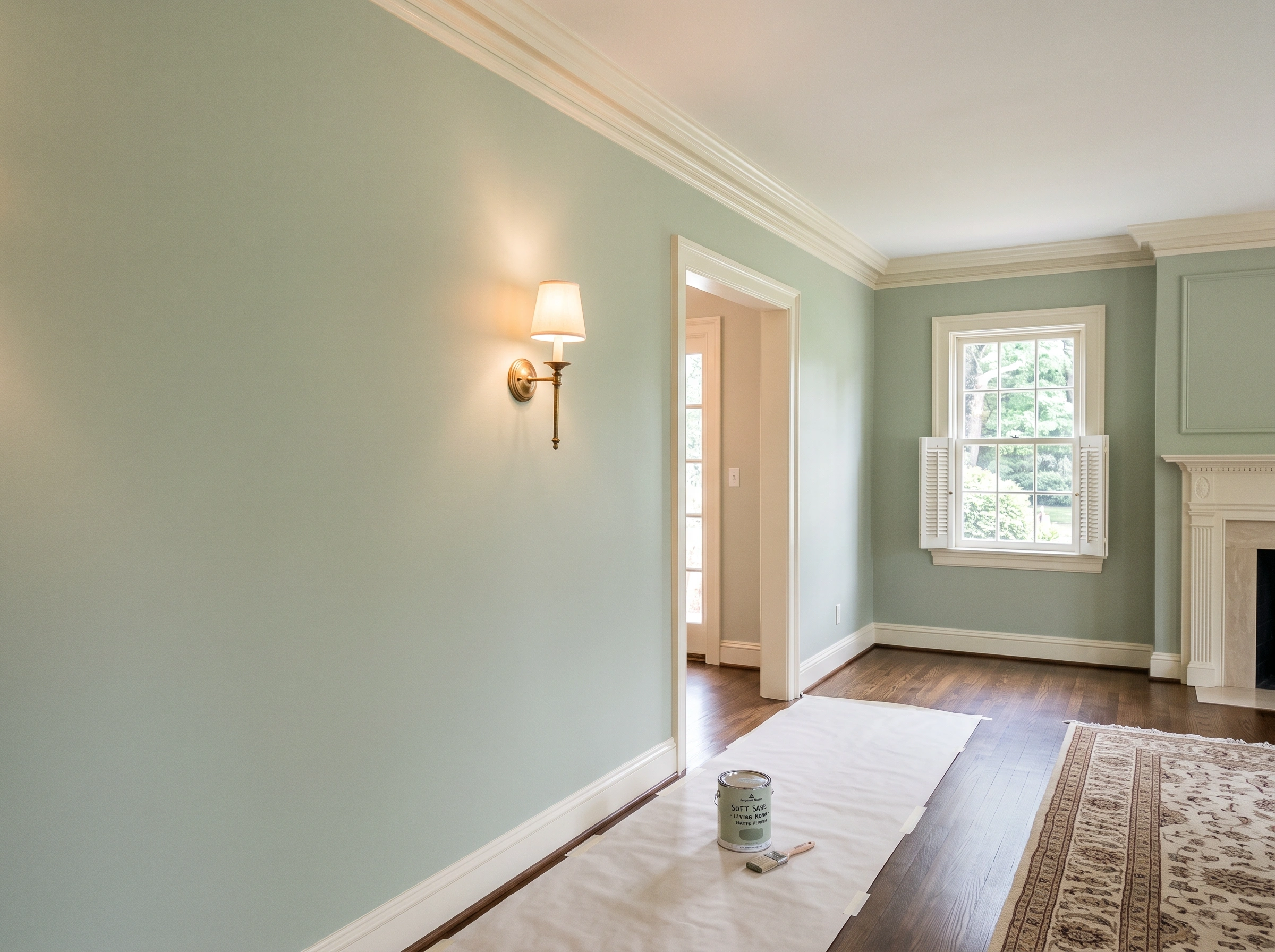
EJC Painting & Drywall provides interior painting and drywall services for homeowners in Ladue and nearby St. Louis County communities, including Frontenac, Clayton, Olivette, Creve Coeur, University City, Town and Country, Richmond Heights, Brentwood, Warson Woods, and surrounding areas.
We can help with painting projects near Clayton Road, Ladue Road, Warson Road, Old Warson Road, McKnight Road, Litzsinger Road, Rodes Park, Tilles Park, Plaza Frontenac, and nearby residential neighborhoods.
Every home has different needs. One Ladue homeowner may need drywall repair before repainting a dining room. Another may need trim and doors refreshed throughout the main level. Another may need a lower level painted after new drywall installation.
EJC Painting & Drywall helps prepare and finish each project with care.
When Should You Hire a Professional Interior Painter?
DIY painting may be manageable for a small, simple room, but professional help is often the better choice for more detailed interior projects.
Ladue homeowners may want to hire a professional when the project includes large rooms, high ceilings, stairways, formal spaces, detailed trim, built-ins, drywall repair, multiple rooms, color changes, or high-visibility areas.
Professional painters can protect the home, repair drywall before painting, prepare trim and doors, apply primer where needed, create cleaner lines, and complete the project with a more consistent finish.
EJC Painting & Drywall can help with interior painting, drywall repair, trim painting, surface preparation, and finishing for Ladue-area homes.
Final Thoughts
An interior painting project should include planning, room protection, drywall repair, surface preparation, priming where needed, paint application, cleanup, and final review.
For Ladue homes, those details matter because smooth walls, clean trim, natural light, and refined interiors can make the quality of the work easy to see.
If your Ladue home needs interior painting, drywall repair before painting, trim painting, or detailed surface preparation, EJC Painting & Drywall can help. Call 314-471-4563 to request a free estimate.